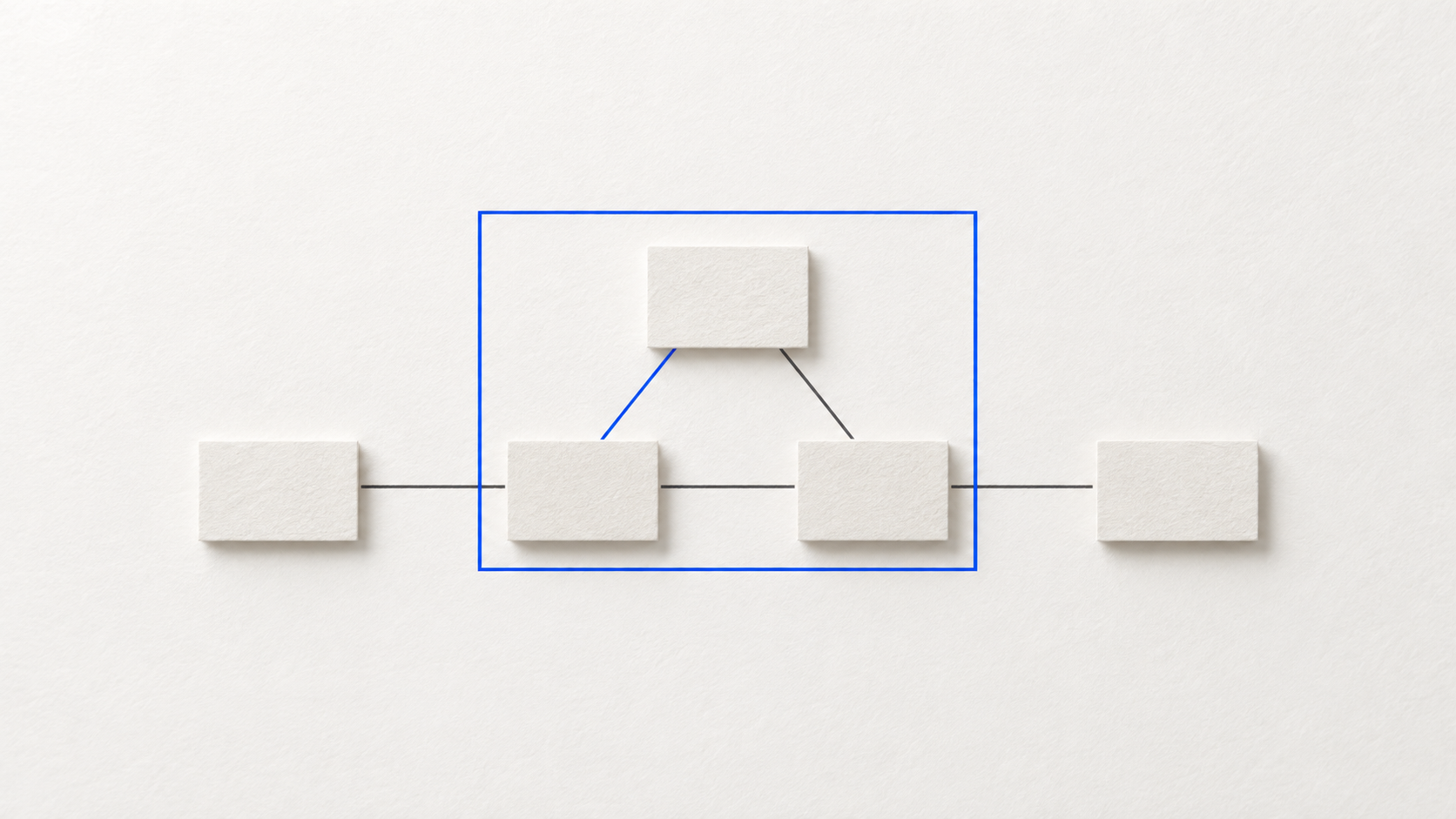
A new interview changes one assumption on your product canvas. A few decisions may need updating. Most of the board should stay exactly where it is.
Sending the entire canvas to an AI every time works, but it becomes expensive as the board grows. Sending only the selected card is cheaper, but may hide the evidence or dependency that changes the answer.
What the canvas already tells the AI
A JSON Canvas document contains three kinds of useful context. The words provide meaning. Groups and links provide structure. Coordinates and sizes provide space.
What each card says.
Groups, links, sources, and dependencies.
Position, size, overlap, and nearby frames.
A screenshot can still reveal how text wraps or whether a result feels crowded. It is most useful as a visual check after a proposed change, rather than the only description of the board.
How does the selector choose context?
A reliable selector starts with the entities named by the requested edit, then expands only where a relationship or the geometry forces it.
I tested that approach with linked decisions, shared sources and resources, possible destination groups, and nearby frames. If those relationships reach the entire board, the selector keeps the entire board.
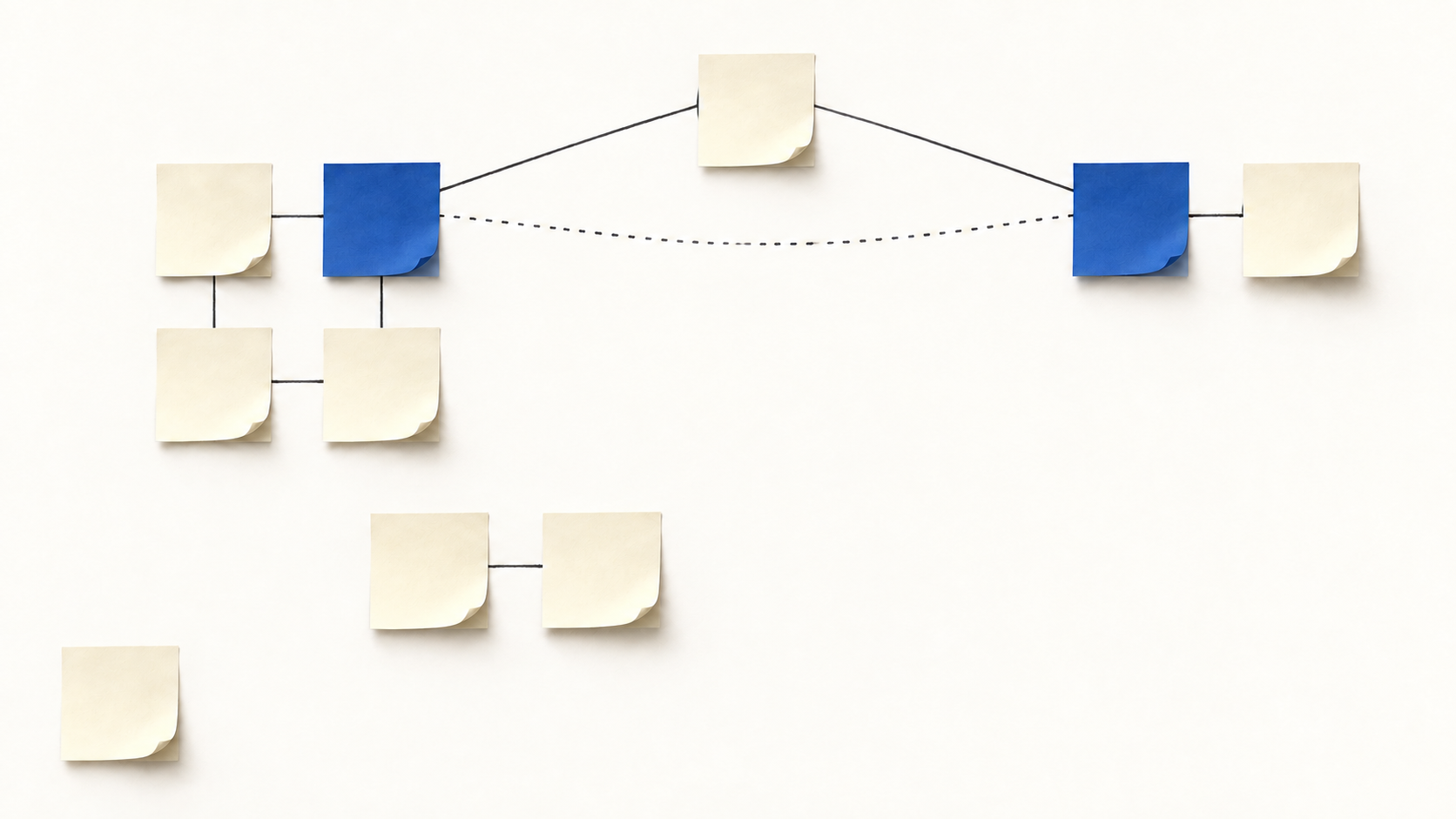
The boundary follows the work. It is not an arbitrary limit on the nearest ten cards.
Did partial context preserve the result?
I tested local edits, long dependency chains, shared sources, crowded groups, and ambiguous requests. Across 24 paired runs, the relevant-context interface with geometry helpers reached the same accepted outcome as the full-canvas coordinate interface. It used 56% fewer tokens.
Timing varied more than token use across the other interfaces, so I treat the difference as an observation rather than a proven speedup.
One new note should change one decision
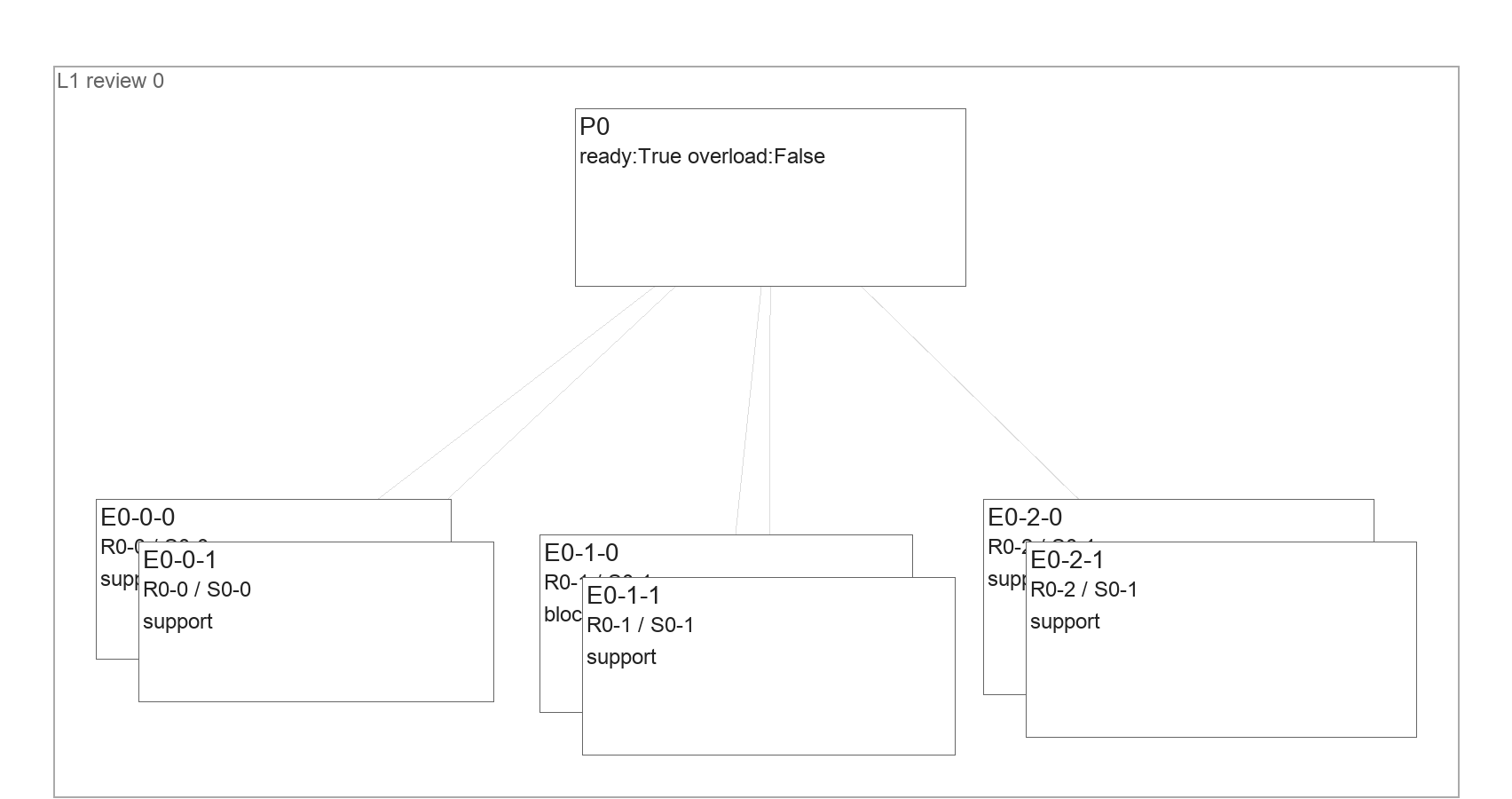
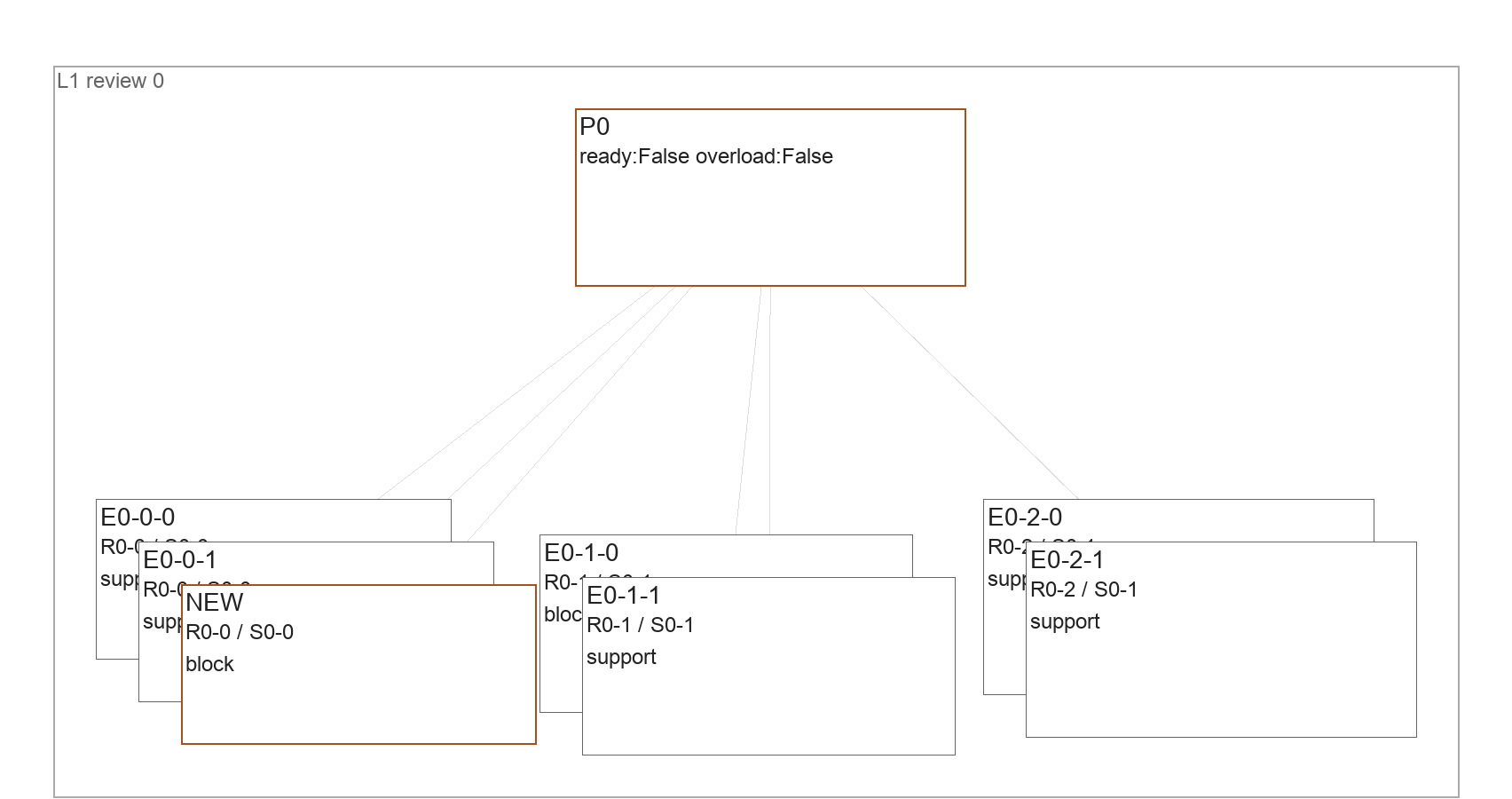
In the clearest case, a new interview note blocks a proposal that had been marked ready. The AI must add the note to the evidence stack, expand its group, and change the proposal status. Everything else should remain where it is.
Reading less did not make the answer vaguer
For that case, I isolated context selection by using coordinate edits in both runs. The full canvas contained 10,624 input tokens. The relationship-selected view contained 1,913. In one representative run, both produced the same two operations:
move NEW to (178, 378)
set P0.ready = falsemove NEW to (178, 378)
set P0.ready = falseThe selector kept the new note, its destination group, the affected proposal, and their relationships. It left unrelated regions out of the prompt. Both repetitions reached the same accepted result because the smaller view preserved the reason for the change, not merely the selected card.
When should it send the full canvas?
The dense case showed the limit. Every group was connected, so the selector kept the complete board and the saving disappeared. Efficiency should follow relevance. The selector should not truncate context silently.
A better interface for AI changes
The useful design is a narrow interface between the model and the board. The app gathers the relevant context, the model decides what should change, and ordinary code handles mechanical operations such as moving, stacking, linking, validation, and undo.
Relationships missing from the file remain a risk. A selector cannot recover a connection that exists only in someone’s head or inside prose that was never made explicit. An AI-ready canvas therefore needs readable content, explicit links, stable IDs, and a safe fallback to broader context.
A canvas does not have to become an image before an AI can understand it. Its file already contains content, structure, and space. The design question is which part of that context the AI needs for the next move.
In Part 3, I let an AI map a product journey and leave its evidence on a shared board.